Vid2MP3 converts video files to MP3 audio. Use the online converter on this page for a YouTube link, or download the Android app to convert videos already stored on your phone - both free, no registration.
Two Ways to Use Vid2MP3
There are two separate tools here, and which one you want depends on where your video is:
The online converter below - for a YouTube link. Paste the URL, click Convert, and download the audio. Nothing to install, works in any browser on any device.
The Android app - for video files already saved on your phone or tablet. It converts them to MP3 locally, without needing an internet connection. The download link is further down this page.
If you are here to grab audio from a YouTube video, use the online converter. If you have recorded a video or already downloaded one and want just the sound from it, the app is the right tool.
Vid2MP3 Online YouTube Converter
Paste the YouTube video URL in the box below and click Convert.
- Copy your YouTube video link and paste it in the input field above
- Click Convert to start
- Choose MP3 and your preferred bitrate on the download page
- Save the file to your device
Works with standard video links,
youtu.be short links, and
Shorts URLs.
Audio Formats: .mp3 .aac .ogg .m4a .wma .flac .wav
Video Formats: .mp4 .m4v .mov .flv .avi .mpg .wmv
By using our online tool you are accepting our terms of use.
Which Bitrate Should You Choose?
Bitrate decides how the audio sounds and how much space it takes. Higher is not automatically better.
320 kbps - for music you intend to keep and listen to on decent headphones. This is the highest quality most source videos actually contain.
192 kbps - the sensible default for general listening. Considerably smaller files, and on phone speakers or earbuds most people cannot tell the difference.
128 kbps - right for anything speech-led: podcasts, lectures, interviews, audiobooks. A spoken recording sounds essentially identical at 128 as at 320 and takes a third of the space.
An honest note on quality. Extracting audio from a video is a lossy process - the audio inside a video file is already compressed, and converting it to MP3 compresses it a second time. In practice the difference is inaudible at 192 kbps and above for most material, but no converter can genuinely claim "no quality loss". Anything promising lossless MP3 from a compressed source is overselling what is possible.
Why Convert Video to Audio at All?
-
File size. Stripping the video track cuts the file by roughly ninety per cent. A 75 MB video becomes a 7 MB MP3.
-
Battery life. Audio playback lets your phone screen sleep; video keeps it on. On a long commute or flight that difference is substantial.
-
It works with music apps. MP3 is read by essentially every music player, car stereo and podcast app in existence.
-
Storage. Around 140 MP3s fit in the space of 13 videos of the same length.
The Vid2MP3 Android App
The app does a different job from the online converter above: it converts video files already stored on your device into MP3. Because everything happens on the phone itself, it works with no internet connection at all - useful on a flight, or anywhere with patchy coverage.
Typical uses are extracting audio from a video you recorded yourself, pulling the sound from a lecture or tutorial you already downloaded, or turning a clip into a ringtone.
Installing it:
1. Use the Download link at the bottom of this page to get the APK.
2. Open the downloaded file from your notification panel or Downloads folder.
3. Android will ask for permission to install from this source the first time. This is a normal prompt for any app not installed through the Play Store - only grant it for files from sites you trust, and revoke it afterwards if you prefer.
4. Tap Install, then open the app from your app drawer.
Converting a file with the app:
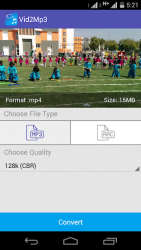
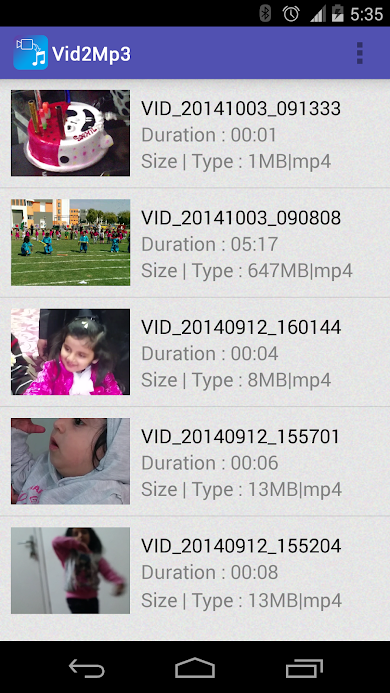
1. Tap the button to choose a video, and browse to the folder holding it.
2. Select the video file you want the audio from.
3. Choose your audio quality from the dropdown.
4. Tap Convert and wait for it to finish.
5. The MP3 is saved to the output folder set in the app's settings, where your music player can pick it up.
Where Your Files Go
From the online converter - Android saves to the Downloads folder; most music apps scan it automatically, though some need a library refresh before new tracks appear. On iPhone, Safari saves to the Files app rather than Apple Music, which is standard iOS behaviour. On desktop, your browser's Downloads folder.
From the Android app - the destination folder you set in the app's settings. If a converted file does not show up in your music player, a library rescan usually resolves it.
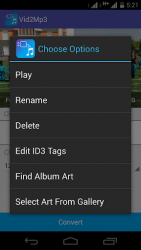
Naming files usefully. Converted files often arrive with unhelpful names, and music players sort by tags rather than filenames - which is why everything can end up under "Unknown Artist". Editing the title, artist and album fields takes a couple of minutes and makes a library genuinely usable later. MP3Tag on Windows and Kid3 on macOS and Linux both handle this in bulk and are free.
If Something Does Not Work
"That does not look like a YouTube link" - the pasted text is not a complete video address. Copy the full URL from your browser's address bar, or use the Share button in the YouTube app and choose Copy link. If the video is already on your phone rather than online, use the app instead.
Nothing happens when you click Convert - usually a script blocker or privacy extension. Allow scripts for this page, or try a different browser.
The download stops partway - typically an interrupted connection, common on mobile data. Delete the partial file before retrying, because some browsers resume into the same broken file.
The file will not play - check the size first; anything far smaller than expected did not finish, even if it looks complete in a folder listing. VLC plays essentially every audio format and is the fastest way to tell whether the problem is the file or the player.
The app does not appear in my music library - most Android music players need a library rescan before newly created files show up. Look for a "refresh" or "rescan media" option in your player's settings.
Is Vid2MP3 Safe?
The online converter on this page asks for a video link and nothing else - no email, no account, no browser extension.
For the Android app, the honest position is that any APK installed outside the Play Store requires you to grant an additional permission, and that is a decision worth making deliberately. Only install APKs from sites you trust, check that the file you downloaded is the one you expected, and revoke the install permission afterwards if you would rather not leave it enabled.
General warning signs on converter sites, worth learning once:
- A notification permission prompt on arrival - no converter needs to send you push notifications.
- Several download buttons where only one is real.
- An .exe file when you expected an .apk or .mp3 - always check the extension.
- A "codec required" or "player update" prompt. Modern browsers play MP3 natively.
Legal Use
Convert audio you own, have explicit permission to use, or that is published under a licence permitting download. Public-domain recordings and Creative Commons material are fine - YouTube marks Creative Commons licensing in the video description.
Downloading copyrighted music without permission is a violation in most countries regardless of which tool is used. The legitimate uses are common: your own recordings, lectures released for offline study, podcasts distributed for offline listening, and royalty-free audio for projects.
Frequently Asked Questions
What is the difference between the online converter and the app?
The online converter works from a YouTube link and needs an internet connection. The Android app converts video files already stored on your phone and works entirely offline. Use whichever matches where your video currently is.
Does Vid2MP3 work without an internet connection?
The Android app does, because it converts files already on your device. The online converter on this page needs a connection, since it has to fetch the video first.
Which bitrate should I choose?
192 kbps suits most uses. Choose 320 kbps for music you want to keep, and 128 kbps for podcasts, lectures or anything speech-led.
Does converting reduce the audio quality?
Slightly, yes. Audio inside a video file is already compressed, so converting to MP3 compresses it a second time. At 192 kbps and above the difference is inaudible for most material, but no converter can honestly claim zero quality loss.
Does the online converter work with youtu.be and Shorts links?
Yes. Standard watch links, youtu.be short links and /shorts/ URLs are all accepted, including links copied from the YouTube app's Share button.
Is Vid2MP3 free?
Yes. Both the online converter and the Android app are free, with no paid tier and no registration.
Which audio formats are supported?
MP3 and AAC, at bitrates from 128 kbps up to 320 kbps in both constant and variable bitrate modes.
MP3 Audio Format
- Vid2MP3 Converter supports MP3 and AAC audio formats
- Available bit rates are:
128k (CBR), 160k (CBR), 192k (CBR), 256k (CBR)
100k (VBR), 130k (VBR), 165k (VBR), 175k (VBR), 190k (VBR), 225k (VBR), 254k (VBR)
Other Free Converters from Softlookup
-
Conver2MP3 - audio-only online converter, bitrates from 128 to 320 kbps
-
YMP3 - MP3 up to 320 kbps, plus M4A, OGG, FLAC and WAV
-
YTBMP3 - YouTube to MP3 with a full bitrate guide and built-in player
-
Video2MP3 Converter - converts video files already on your device to MP3
-
YTMP4 - if you want the video rather than just the audio
-
Best YouTube to MP3 Converters - our full comparison guide
Vid2MP3 Converter is an Android application available under the
Freeware
license — the APK is 20.4 MB.
We’ve catalogued it under
Productivity.
Help fellow users decide. Share your experience with Vid2MP3 Converter.